
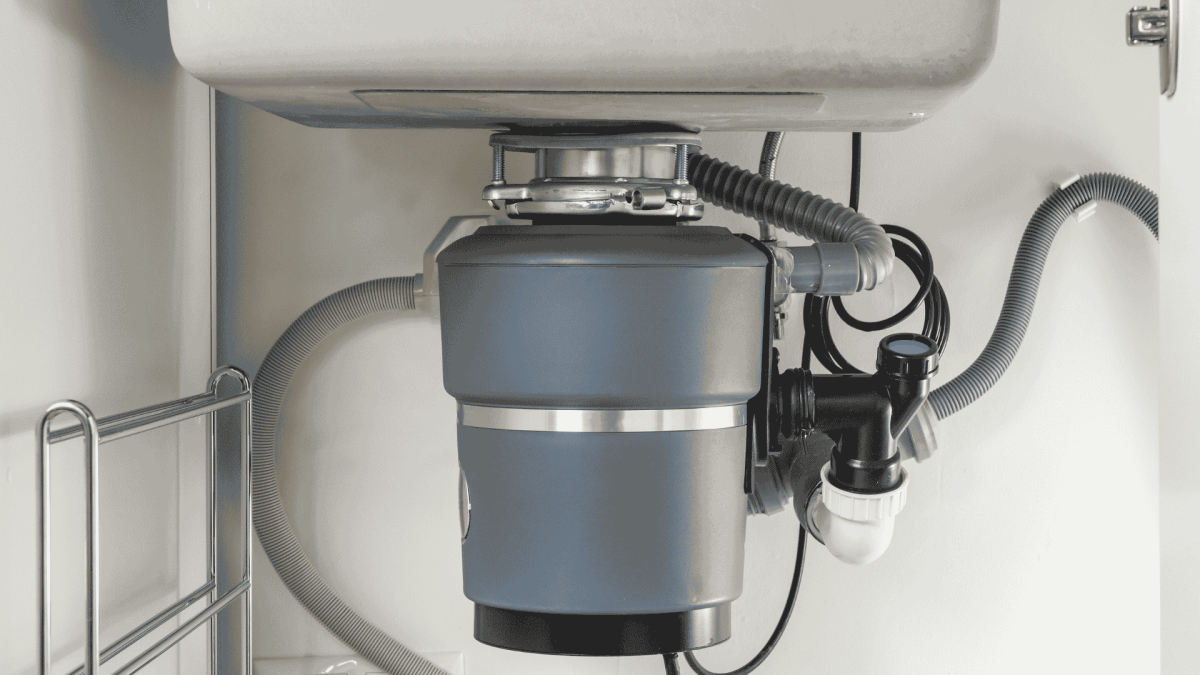
A clogged kitchen sink is frustrating on its own, but add a garbage disposal to the mix and it can feel downright confusing. Water pools in the basin, the disposal hums or does nothing at all, and you're left wondering whether you've broken something expensive. If you're trying to figure out how to unclog a kitchen sink with a garbage disposal, take a breath, because most of these clogs are fixable with tools you already have.
At Plumbing Solutions, we've cleared countless kitchen clogs for families across Henderson, Buncombe, and Transylvania Counties. In this guide, we'll explain why disposals get backed up, walk you through clearing the clog safely, and show you how to keep it from happening again.
Quick Summary
- Kitchen sink clogs with a disposal usually come from grease, coffee grounds, and starchy or fibrous food scraps.
- Always cut power to the disposal before you work on it, and never put your hand inside.
- The fix often follows a simple order: free any jam, hit the reset, plunge, then check the P-trap.
- Skip chemical drain cleaners, which can damage your disposal and pipes.
- If the clog keeps returning or several fixtures back up, it's time to call a professional.
Why Your Kitchen Sink Clogs When You Have a Disposal
It's easy to assume a garbage disposal can handle anything, but it actually contributes to plenty of clogs. The disposal grinds food into small pieces, and those pieces still have to travel through your drainpipes. When they combine with grease and soap, they can build up into a stubborn blockage just past the disposal.
A few culprits cause the majority of these clogs. Grease and cooking oil top the list, since they harden as they cool and trap everything else. Coffee grounds and eggshells create a sandy sludge, while starchy foods like pasta, rice, and potato peels swell and turn gummy. Fibrous scraps such as celery and corn husks can wrap around the disposal and tangle in the pipe.
If you have a double sink, you may notice water backing up into the second basin when the disposal side clogs. That's normal, because both basins share the same drain line. It's a helpful clue that the blockage sits below where the two drains meet.
Safety First
Before you touch anything, safety comes first. A garbage disposal has sharp components, and it should never be treated casually.
Always cut the power before you reach anywhere near the disposal. Flip off the switch, and for extra safety, unplug the unit under the sink or turn off its breaker. Never put your hand or fingers into the disposal, even when it's off. If you need to remove something, use tongs or pliers.
How to Unclog a Kitchen Sink with a Garbage Disposal
With the power off and safety covered, here's how to unclog a kitchen sink with a garbage disposal. Work through these steps in order, since the earlier ones solve most clogs.
Step 1: Check for a Jam
If the disposal hums but doesn't spin, something is jamming the blades. Most disposals come with a small hex wrench (also called an Allen wrench) that fits into a slot on the bottom center of the unit. With the power off, insert the wrench and turn it back and forth to free the blades manually. If you don't have the wrench, you can use a broom handle inserted from the top to gently rotate the blades.
Once the blades move freely, remove any debris you can see with tongs. This alone often gets a stalled disposal working again.
Step 2: Press the Reset Button
Disposals have a built-in safety feature that shuts them off when they overheat or overload. Look for a small red or black reset button on the bottom of the unit. Press it, restore power, and test the disposal with running water.
If it still won't run, give it a few minutes to cool down and try the reset again. A tripped reset is one of the most common reasons a disposal seems dead.
Step 3: Plunge the Drain
If the disposal spins freely but the sink still won't drain, it's time to plunge. Use a flat-bottomed cup plunger, not a toilet plunger, for the best seal. Fill the basin with a few inches of water to cover the plunger's cup.
If you have a double sink, seal the second drain with a wet rag or a stopper so your plunging force goes toward the clog instead of escaping. Plunge firmly for fifteen to twenty seconds, then check whether the water drains. Repeat a few times if needed.
Step 4: Check and Clear the P-Trap
When plunging doesn't do it, the clog may be sitting in the P-trap, the curved pipe under the sink. Place a bucket underneath to catch water, then unscrew the connectors and remove the trap. You'll often find the blockage right there.
Clean the trap out thoroughly, check the pipe leading into the wall for debris, then reassemble everything and run water to test. This step catches a surprising number of stubborn clogs.
Step 5: Try Baking Soda and Vinegar
For lingering slow drainage, a natural flush can help. Pour half a cup of baking soda into the drain, followed by a cup of white vinegar. Let it fizz for about fifteen minutes, then flush with hot water from the tap.
We recommend skipping chemical drain cleaners entirely. They can corrode your disposal and pipes, and the standing water in a clogged sink turns them into a hazard. For more on caring for your whole kitchen system, our complete guide to kitchen plumbing is a great resource.
Step 6: Snake the Drain
If the clog is deeper than the P-trap, a drain snake can reach it. Feed the cable slowly into the pipe until you hit resistance, then turn the handle to break up or hook the blockage. Withdraw it carefully and run water to confirm the drain is clear.
Go gently here. Forcing a snake can damage older pipes, which are common in many Western North Carolina homes.
What Not to Put Down a Garbage Disposal
The best way to unclog a kitchen sink is to avoid the clog in the first place. Your disposal isn't a trash can, and a few habits go a long way. Keep these items out of it:
- Grease, oil, and fat
- Coffee grounds
- Eggshells
- Pasta, rice, and bread
- Potato peels and other starchy scraps
- Fibrous vegetables like celery and corn husks
- Bones and fruit pits
Always run cold water while the disposal is on and for a few seconds after, and feed food in gradually rather than all at once. These small steps prevent most kitchen clogs before they start.
When to Call Plumbing Solutions
Many kitchen clogs clear with the steps above, but some point to a bigger problem. If the clog keeps returning, if water backs up into other fixtures, or if you're dealing with standing water that won't budge, the blockage may sit deep in your main line where home tools can't reach.
Our licensed technicians handle these situations every day with professional drain cleaning equipment that clears the line without harsh chemicals. We can also diagnose a failing disposal and recommend the right fix. Whatever the issue, our residential plumbing team is ready to help.
We serve homeowners throughout Henderson, Buncombe, and Transylvania Counties during regular business hours. When a kitchen clog has you stuck, contact Plumbing Solutions and we'll get your sink flowing again.
Frequently Asked Questions
Why is my sink clogged when the disposal still works?
A working disposal only grinds food, it doesn't guarantee a clear drain. The clog is usually downstream, in the pipe past the disposal or in the P-trap, where grease and ground food have collected. Clearing that section, not the disposal itself, is what solves the problem.
Can I use Drano in a garbage disposal?
We don't recommend it. Chemical drain cleaners can corrode the disposal's components and your pipes, and they're especially risky when standing water is present. Mechanical methods like plunging, clearing the P-trap, and snaking are safer and more effective.
Why is there water in both sides of my double sink?
Both basins of a double sink share a single drain line, so a clog below the junction causes water to back up into both sides. It's a sign the blockage sits past the point where the two drains connect, not in the disposal alone.
How do I reset my garbage disposal?
Look for a small reset button on the bottom of the unit, press it, then restore power and test with running water. If the disposal tripped from overheating, you may need to let it cool for a few minutes before the reset holds.
Why does my disposal smell, and what's the black gunk?
That odor and dark residue come from food particles and grease building up inside the disposal and drain. Regular cleaning with baking soda, vinegar, and cold water helps, but a persistent smell can signal buildup deeper in the line that may need professional attention.
Conclusion
Learning how to unclog a kitchen sink with a garbage disposal is one of the more empowering home repairs, because most clogs come down to a jam, a reset, or a blockage you can reach. With the power off and a little patience, you can handle the majority of them yourself and get back to your day.
When a clog keeps coming back or spreads to other drains, that's your signal to bring in a professional. The team at Plumbing Solutions has kept Western North Carolina kitchens running for more than 25 years, and we're always glad to help. Reach out to us today and we'll take it from there.