
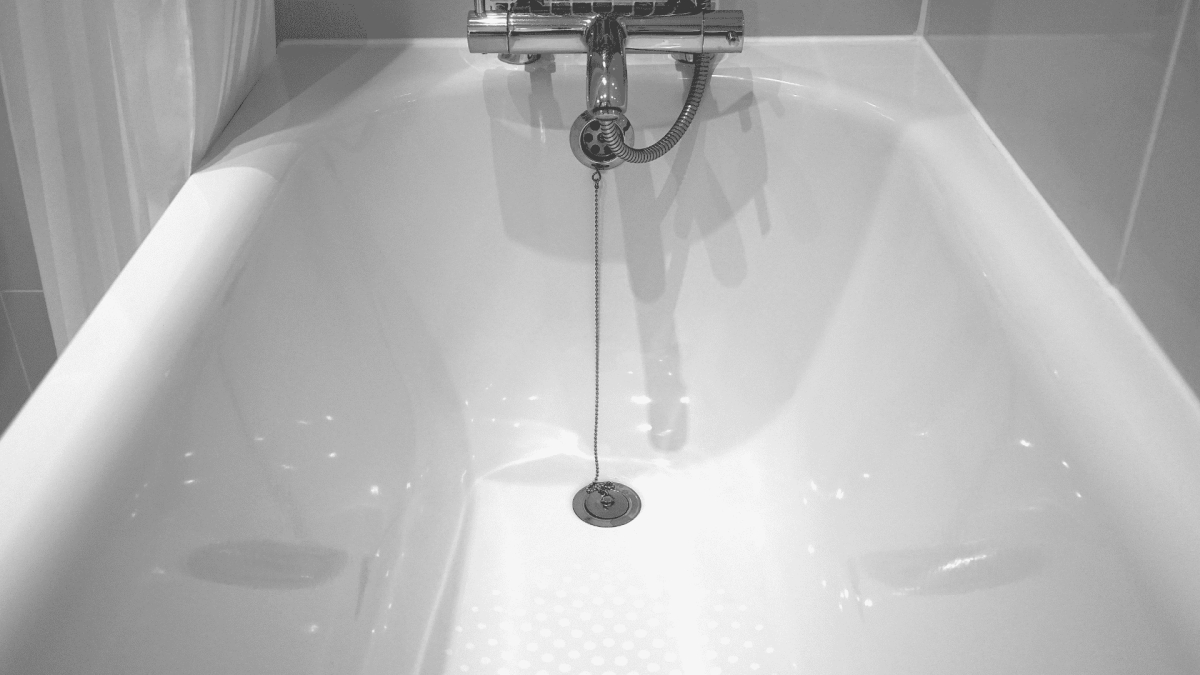
Few things put a damper on a relaxing soak like standing ankle-deep in water that just will not go down. A slow drain in a bathtub is one of the most common plumbing headaches homeowners face across Henderson, Buncombe, and Transylvania Counties, and the good news is that many cases can be solved at home with a little patience and the right approach.
At Plumbing Solutions, we have helped Western North Carolina families keep their bathrooms running smoothly for more than 25 years. In this guide, we will walk you through why your tub drains slowly, how to fix it yourself step by step, and when it makes sense to call in a professional.
Quick Summary
- A slow-draining bathtub is usually caused by hair, soap scum, and biofilm collecting near the stopper and inside the P-trap.
- Most cases respond to simple fixes: cleaning the stopper, plunging, and flushing with baking soda and hot water.
- Harsh chemical drain cleaners often do more harm than good, especially in the older pipes common throughout Western North Carolina.
- If several drains are slow at once, or the problem keeps coming back, the real issue may sit deeper in your main line.
- When at-home steps do not do the trick, Plumbing Solutions is here to help during business hours.
Why Your Bathtub Drains Slowly
Understanding the cause makes the fix much easier. A slow drain in a bathtub is rarely a sudden event. In most homes it is the result of a slow, steady buildup that finally narrows the pipe enough for you to notice the water pooling around your feet.
Hair is almost always the leading offender. Every shower sends strands down the drain, where they tangle around the stopper mechanism and catch onto anything else passing through. Soap scum, body oils, and skin cells cling to those strands and to the pipe walls, forming a sticky biofilm that keeps growing until water can barely squeeze past.
Common culprits behind a slow tub drain include:
- Hair and soap scum: The classic combination that mats together just below the drain opening.
- Biofilm in the P-trap: A slippery layer of oils and residue that coats the curved section of pipe under your tub.
- Mineral buildup: Harder water can leave deposits that gradually shrink the pipe's interior.
- A deeper clog: Debris that has traveled past the trap and lodged farther down the line.
- Venting problems: A blocked vent stack can slow drainage even when the pipe itself is clear.
Western North Carolina's housing mix matters here too. From historic homes near downtown Hendersonville to cabins tucked into the mountains around Brevard and Asheville, many properties have older plumbing that is more prone to buildup and more sensitive to the wrong cleaning methods. Knowing what you are working with helps you choose a fix that solves the problem without creating a new one.
What You'll Need
You likely have most of these items on hand already. Before you start, gather:
- A pair of rubber gloves
- A flashlight
- A cup plunger
- Baking soda and white vinegar
- A kettle or pot of hot water
- A drain snake or a bent wire hanger
- A screwdriver, in case your stopper needs to be removed
How to Fix a Slow Drain in Your Bathtub
Work through these steps in order. Many homeowners find the problem clears after the first two or three, so there is no need to jump straight to the more involved methods.
Step 1: Clean the Stopper and Strainer
Your tub's stopper is a magnet for hair and gunk. Depending on the style, you may be able to lift out a pop-up stopper by hand, or you might need a screwdriver to remove a couple of screws first. Once it is out, you will often find a surprising tangle of debris wrapped around the base.
Clear away everything you can see, then rinse the stopper thoroughly before setting it aside. In a lot of cases, this single step restores normal drainage because the blockage was sitting right at the opening the whole time.
Step 2: Remove Visible Hair and Debris
With the stopper out, shine your flashlight into the drain. Use a drain snake, a bent wire hanger, or a specialized plastic drain tool to hook and pull out any hair and buildup within reach. Go slowly and pull the debris toward you rather than pushing it deeper into the pipe.
This is not glamorous work, but it is often the most effective. The area just below the drain opening is where clogs most commonly form, so a thorough cleaning here goes a long way.
Step 3: Try a Plunger
If water is still sluggish, a plunger can dislodge whatever remains. Fill the tub with just enough water to cover the plunger's rubber cup, which helps create a proper seal. If your tub has an overflow opening, cover it with a wet rag so your plunging force is directed at the clog instead of escaping.
Position the plunger over the drain and pump firmly several times, then pull up sharply to break the blockage loose. Repeat the process a few times if needed, and run the water to check your progress.
Step 4: Flush With Baking Soda and Hot Water
For a natural cleaning boost, pour about half a cup of baking soda directly into the drain, followed by half a cup of white vinegar. The mixture will fizz as it works to break down grease and residue clinging to the pipe walls. Let it sit for around fifteen minutes.
Follow up by flushing the drain with a kettle of hot water. Avoid boiling water if you have PVC pipes, since very high heat can soften the joints over time. This method is gentle, inexpensive, and safe for the kinds of aging pipes found in many WNC homes.
Step 5: Use a Drain Snake for Stubborn Clogs
When a clog sits deeper than you can reach by hand, a drain snake is your best friend. Feed the cable slowly into the drain until you meet resistance, then turn the handle to break through or hook the blockage. Withdraw the snake carefully and dispose of whatever comes up with it.
Take your time and use a light touch. Forcing a snake can scratch or crack older pipes, and that turns a minor annoyance into a much bigger repair.
What to Avoid
It is tempting to reach for a bottle of chemical drain cleaner, but we generally recommend against it. These products rely on harsh reactions that generate heat inside the pipe, and in older or plastic plumbing that heat can weaken joints and cause leaks. They rarely clear a clog completely, so the problem tends to return.
Chemical cleaners also mask the underlying issue. If hair and biofilm are the real cause, a caustic rinse may buy you a few days before the buildup returns. Worse, if you later need professional drain cleaning, leftover chemicals in standing water create a hazard for the plumber working on your line. Mechanical methods like plunging and snaking are safer and far more reliable.
When to Call Plumbing Solutions
Plenty of slow drains clear up with the steps above. Some, though, are a signal of something bigger, and that is where our team comes in. Consider reaching out if you notice any of the following:
- The tub drains slowly again within a few days of cleaning it.
- More than one fixture is draining slowly, which can point to a clog in your main line.
- You hear gurgling from the drain or nearby toilet, a sign of a venting or main-line issue.
- Water backs up into the tub when you run another fixture.
Recurring or whole-house drainage problems usually mean the clog is farther down the system than any home tool can reach. Our licensed technicians use professional-grade equipment to locate and clear these blockages without harsh chemicals and without guesswork. To learn more about the warning signs worth watching, our guide on the signs you need a professional drain cleaning breaks it down in plain terms.
We proudly serve homeowners throughout Henderson, Buncombe, and Transylvania Counties with dependable residential plumbing services during our regular business hours. When a slow drain has you stumped, contact Plumbing Solutions and we will get your bathroom flowing freely again.
Frequently Asked Questions
Why is my bathtub draining slowly but not completely clogged?
A partial slowdown usually means buildup has narrowed the pipe without blocking it entirely. Hair, soap scum, and biofilm collect gradually near the stopper and in the P-trap, leaving just enough room for water to trickle through. Cleaning the stopper and clearing the debris within reach typically restores full drainage.
Can I use a chemical drain cleaner on a slow bathtub drain?
We do not recommend it. Chemical cleaners can damage older and plastic pipes, rarely clear the clog completely, and often mask the real cause so it returns. Mechanical approaches like plunging, snaking, and a baking soda flush are safer and more effective for a slow drain in a bathtub.
How often should I clean my bathtub drain?
A light cleaning every month or two helps prevent buildup from ever reaching the point of a slow drain. Removing and rinsing the stopper, clearing visible hair, and running a baking soda and hot water flush is a simple routine that keeps most tubs draining well between deeper services.
Why are multiple drains in my home draining slowly?
When several fixtures slow down at the same time, the problem is likely in your main sewer line rather than any single drain. This is beyond the scope of home tools and calls for professional equipment. If you are seeing this pattern, it is a good time to reach out to a plumber.
Is a slow-draining bathtub a plumbing emergency?
A single slow tub drain is usually a routine maintenance issue rather than an emergency. That said, if it is paired with backups, gurgling, or multiple slow drains, it can point to a more serious main-line problem that should be addressed promptly. Reach out during business hours and we will help you sort out how urgent it is.
Conclusion
A slow-draining bathtub is frustrating, but it is often one of the more approachable plumbing problems to tackle at home. By cleaning the stopper, clearing the hair, plunging, and flushing the line, most homeowners can restore normal drainage in an afternoon. Steering clear of harsh chemicals protects your pipes and keeps a small job from becoming a costly one.
When the problem keeps returning or spreads to other drains, that is your cue to bring in a professional. The team at Plumbing Solutions has helped Western North Carolina families with reliable, honest plumbing service for more than 25 years, and we are always glad to help. Reach out to us today and let us take it from here.